The First Thing We Always Build
Every engagement starts the same way. A CEO or founder calls, describes their tech stack, lists their frustrations, and asks what we should tackle first. AI agents? Process automation? A new CRM? ERP migration?
The answer, almost without exception, is: none of the above. Build the dashboard first.
Not because dashboards are glamorous. They are not. But because a live, connected view of your business does three things that nothing else can do simultaneously:
- It kills the Monday morning spreadsheet — immediately freeing 10+ hours per month of manual reporting time.
- It creates a single source of truth — ending the “well, my numbers show...” debates that waste every meeting.
- It reveals the real problems — because when you can finally see your business clearly, the priorities become obvious and you stop guessing.
The dashboard does not solve your problems. It shows you which problems to solve — in order, with data, for the first time.
Why Executives Cannot Answer Simple Questions
Here is a test. Ask your CEO: “How much did we sell last week?”
In most companies I work with, this question triggers a chain of events: the CEO asks the VP of Sales, who asks the operations manager, who opens the ERP, then a spreadsheet, then the eCommerce platform, then the marketplace portal, manually reconciles the numbers, and emails a report back. Elapsed time: somewhere between two hours and two days.
The answer should take five seconds. Open the dashboard. Look at the number. It updated 30 seconds ago. It is the same number for everyone.
The inability to answer simple questions quickly is not a data problem. The data exists — in the ERP, in Shopify, in the marketplace, in the accounting system. The data is trapped in systems that do not talk to each other. The dashboard is the first step toward freeing it.
What a Real Executive Dashboard Contains
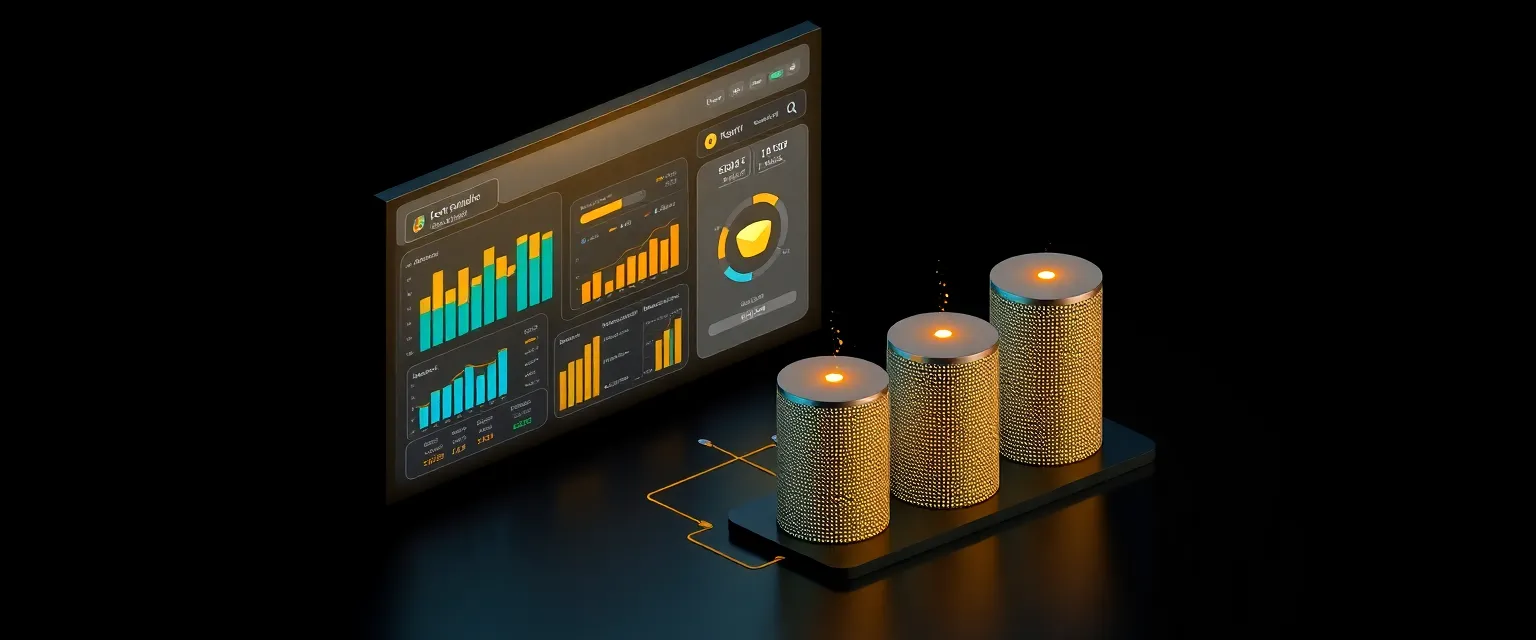
Not a wall of charts nobody reads. Not a BI tool that requires an analyst to operate. A dashboard designed for the person who runs the business — updated live, accessible on a phone, and showing exactly what matters.
Revenue Intelligence
Revenue by channel, by rep, by day — with prior-year comparison. Not “we had a good month.” Specific: “Tuesday March 18 was 12% ahead of Tuesday March 19 last year, driven by a 23% increase in phone orders.”
This is not vanity. This is operational intelligence. When you can see which days, which channels, and which reps are outperforming — in real time — you stop making decisions based on monthly summaries that arrive three weeks late.
Gross Margin by Product
Revenue is not profit. Every business knows this in theory. Very few know it in practice — because calculating real margin requires combining data from multiple systems.
Item cost from the ERP. Marketplace fees from eBay or Amazon. Shipping costs from the carrier. Payment processing fees from Stripe or PayPal. When you combine all of these, some “best sellers” turn out to be margin destroyers. The $49.95 product that sells 200 units a month might be making you $0.40 per unit after fees and shipping.
You cannot see this in any single system. You can only see it on a dashboard that combines them all.
Order Backlog
Not just count of pending orders — dollar value of pending fulfillment. There is a massive difference between “we have 40 orders to ship” and “we have $160,000 in orders waiting to ship.” One is a task. The other is a priority.
Customer Lifetime Value
Segmented, scored, and ranked. In one engagement, we discovered that the top 200 customers represented 60% of total revenue. Before the dashboard, nobody knew who they were. Every caller got the same treatment. The $50,000 customer got the same hold music as a first-time inquiry from a Google ad.
Once the dashboard ranked customers by LTV, the sales team changed overnight. High-value customers got priority callbacks, personalized outreach, and proactive check-ins. Retention went up. Referrals went up. Revenue per customer went up.
Campaign Attribution
Every marketing dollar traced from spend to sale. Not clicks. Not impressions. Not “attributed conversions” as defined by the platform selling you the ads. Actual orders with actual revenue from actual customers who came in through that specific campaign.
The revelation in one engagement: the most expensive channel per acquisition also produced the highest-LTV customers. The “cheap” channel they had been scaling was producing one-time buyers who never came back. A single dashboard panel shifted $40,000 in quarterly ad spend to where it actually drove long-term value.
The Quick Win That Pays for Everything
While building one dashboard, we noticed something in the phone system data that nobody had been tracking: missed calls from national advertising campaigns.
The company was spending six figures annually on radio advertising. Calls came in waves — morning drive time, lunch hours. When all reps were on the phone, calls went to voicemail. Those voicemails were checked... eventually. Sometimes the same day. Sometimes never.
We set up real-time missed call notifications — SMS and email to the sales team within 60 seconds. Before the end of week two, a rep called back a missed call within 3 minutes and closed a $5,000 sale that would have evaporated into a voicemail.
One notification. One callback. Five thousand dollars. The engagement paid for itself before the first invoice was due.
This discovery only happened because we were connecting the phone system to the data pipeline for the dashboard. The dashboard was the intended deliverable. The missed call system was a bonus that fell out of the plumbing work. This happens in almost every engagement — connecting systems reveals problems you did not know you had.
What the Dashboard Is Not
Let us be clear about what this is not:
It is not a BI tool. Tableau, Looker, Power BI — these are powerful platforms. They are also designed for analysts, not executives. If your CEO needs to write a query or ask someone to pull a report, it has already failed. The executive dashboard is a single screen with live numbers. No training required. No analyst in the loop.
It is not a monthly report. Monthly reports are autopsies. They tell you what happened after it is too late to do anything about it. A live dashboard is a vital-signs monitor. It tells you what is happening right now — while you can still act.
It is not a replacement for your existing tools. We do not rip anything out. The ERP stays. The CRM stays. The eCommerce platform stays. The dashboard sits on top and pulls from everything. Your people still use the tools they know. They just stop being the translation layer between them.
The best dashboards are not the ones with the most charts. They are the ones where the CEO opens it once, gets the answer they need, and closes it. Under 10 seconds. Every time.
The Technical Reality: This Is Not Hard
Building an executive dashboard is not a six-month project. Here is the actual timeline:
Days 1-3: Connect the data sources. Most modern platforms have APIs. ERP → central warehouse via scheduled sync (every 5 minutes for orders, hourly for inventory). eCommerce → webhook for real-time order events. Marketplace → daily batch for fees and payouts. CRM → bidirectional sync for contact enrichment.
Days 4-7: Build the data model. One schema, one source of truth. Revenue, orders, customers, products — normalized and reconciled. This is where the “my numbers show” problem dies. There is only one set of numbers now.
Days 8-14: Build the dashboard UI. Revenue panels, margin calculations, backlog tracking, customer segments. Mobile-responsive. Role-based access. The CEO sees everything. Reps see their territory. The warehouse sees fulfillment.
Day 15: The Monday morning spreadsheet ritual is dead. Permanently. The person who used to build it now does actual operations work instead.
Two weeks from kickoff to live dashboard. Not because we cut corners — because the problem is fundamentally a plumbing problem, and plumbing is what we do.
Why This Should Be First
Every company wants to talk about AI agents and automation. And they should — that is where the transformative value lives. But here is what happens when you jump straight to automation without the dashboard:
You automate chaos. If your data is scattered across disconnected systems, an AI agent trained on that data will produce scattered, disconnected outputs. Garbage in, garbage out — but faster.
You cannot measure impact. If you deploy an automation and cannot see whether it moved the needle — because you have no baseline — how do you know it worked? How do you justify the next investment?
You lose executive trust. The CEO greenlights an AI project. Three months later, they ask what changed. Nobody can point to a number. The project gets shelved. The company goes back to spreadsheets.
The dashboard solves all three. It connects the data (prerequisite for any automation). It establishes the baseline (so you can measure everything that comes after). And it builds executive trust in the systems — which is what greenlights the real transformative work.
The dashboard is not the destination. It is the foundation. Everything else you want to build — AI agents, automation, scaling operations — becomes possible once you have a connected view of the truth.
The Conversation to Have
If you are a CEO or founder reading this, here is what I would ask you on a call:
How do you know how your business is doing right now? Not last month. Right now. If the answer involves asking someone to pull a report, you need a dashboard. If the answer involves a spreadsheet someone updates manually, you need a dashboard. If the answer is “I don't, really” — you definitely need a dashboard.
The good news: this is the easiest, lowest-risk, fastest-ROI project in your entire technology roadmap. No rip-and-replace. No multi-month implementation. No change management. Just connect what you already have and let the data flow.
The spreadsheet dies. The truth appears. And for the first time, you can see your business clearly enough to know what to do next.