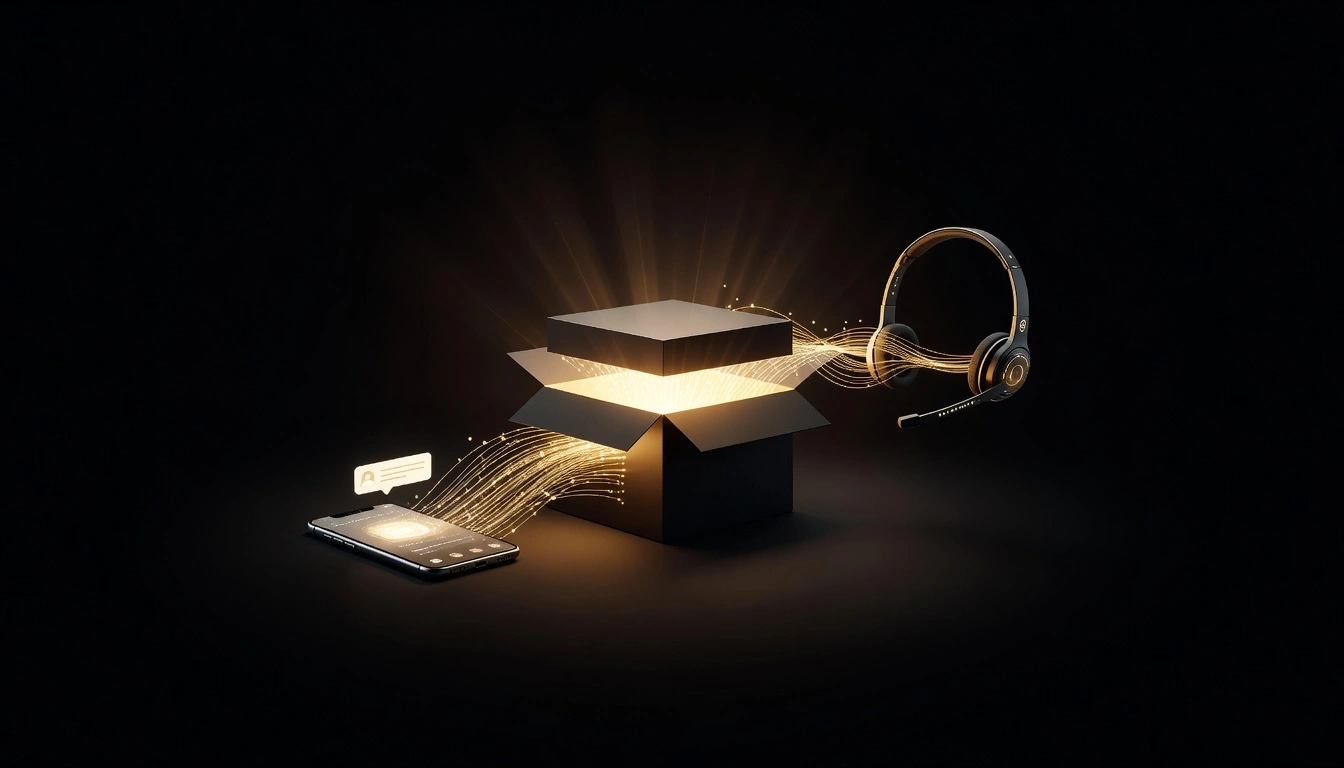
The Moment Nobody Is Capturing
Every eCommerce company tracks shipments. You get a tracking number, your customer gets a tracking number, and somewhere in a warehouse a label printer goes brrrr. The package moves through the system, and eventually UPS or FedEx marks it as delivered.
At that exact moment, your customer is experiencing peak positive emotion toward your brand. They are unboxing. They are excited. They are holding something they chose to spend money on and it just arrived.
This is the dopamine window. And almost nobody is using it.
The Science of the Unboxing Moment
Dopamine does not peak when you receive a reward. It peaks in anticipation of a reward. But there is a second, smaller spike when the reward actually arrives — especially if it meets or exceeds expectations. That delivery confirmation is your customer in a neurochemical state that is literally wired for positive association.
When your rep calls during this window — within minutes or hours of delivery — the conversation starts from a completely different place than a cold outreach. The customer is already happy. They already trust you enough to have bought something. And now they are holding proof that you delivered.
The difference between a cold call and a dopamine call is not technique. It is timing.
How the Automation Works
The system is straightforward. No custom hardware. No enterprise software licenses. Just plumbing.
- Shipping carrier webhook fires — UPS, FedEx, or USPS sends a delivery confirmation event to your system
- Customer match — The tracking number maps to an order, the order maps to a customer, the customer maps to a CRM contact record
- Rep notification — The assigned rep gets an instant alert: push notification, SMS, Slack message, or HubSpot task
- Call prompt with context — The notification includes what was ordered, order value, customer history, and any notes. Rep does not need to look anything up.
- Call is logged automatically — Whether the rep uses the VoIP system or a mobile softphone, the call gets logged on the contact record
Total time from delivery to rep phone ringing: under 60 seconds.
What the Rep Actually Says
This is not a sales call. This is a relationship call. The script is almost insultingly simple:
“Hey [Name], this is [Rep] from [Company]. I saw your order just arrived — just wanted to make sure everything looks good and see if you had any questions about it.”
That is it. No upsell. No pitch. No survey. Just a human checking in at the exact right moment. The customer feels cared about — because they are being cared about.
The upsell happens naturally in the conversation. “Oh you liked that one? We actually just got in a limited run of...” But it is organic, not scripted. And it works dramatically better because the customer is already in a positive state.
The Numbers That Matter
We do not have five years of peer-reviewed data on this. What we have is operational experience and common sense:
- Repeat purchase rate — Customers who receive a follow-up call within 24 hours of delivery buy again at significantly higher rates
- Average order value — Second orders from “dopamine called” customers trend higher because trust is already established
- Referral rate — Nobody refers a company that sends them a tracking email. People refer companies that call to make sure they are happy.
- Return rate — A quick call catches issues before they become returns. “Oh, that part goes on the other side” is cheaper than processing a return.
Why This Is Not Happening Already
Three reasons:
1. The data lives in different systems. Shipping data is in your ERP or fulfillment platform. Customer data is in your CRM. Rep assignments are somewhere else. Nobody has connected the pipes. An AI agent can do this in its sleep — literally, on a cron job.
2. Reps do not think of it. Sales teams are trained to focus on net-new leads, not existing customers who just received an order. But customer retention is cheaper than acquisition. Always has been.
3. It feels weird. “Won't the customer think it's creepy that we know their package arrived?” No. They literally gave you their address and paid you money. Checking in is not surveillance — it is service. The bar for “creepy” is way higher than “hey, did your stuff arrive okay?”
The Tech Stack
You do not need an enterprise platform to build this. Here is what it takes:
- Shipping webhook — Most carriers and fulfillment platforms support delivery webhooks (ShipStation, ShipBob, EasyPost, or direct carrier APIs)
- CRM with contact records — HubSpot, Salesforce, or even a well-structured database
- Notification system — Slack, SMS via Twilio, push notification, or a HubSpot task creation
- VoIP with auto-logging — Click-to-call from the CRM, call logged automatically on the contact record
- An orchestration layer — This is where an AI agent earns its keep. It watches the webhook, matches the customer, checks rep availability, and fires the notification.
The Bigger Picture: Event-Driven Sales
Shipping delivery is just one trigger. Once you build the pattern, you can apply it everywhere:
- Price drop on a wishlist item → Notify the customer and the rep
- Restock of a previously sold-out item → Alert customers who inquired
- Anniversary of first purchase → Personalized outreach
- Customer hits a spending milestone → VIP tier upgrade call
- Cart abandoned for 2+ hours → Rep follow-up instead of another email
The shift is from calendar-driven sales (call the list on Tuesday) to event-driven sales (call when something meaningful happens). The technology exists. The question is whether your team is wired to use it.
Start Here
You do not need to automate everything on day one. Start with one trigger:
- Pick your highest-value product category
- Set up delivery webhooks for those orders
- Route notifications to the assigned rep
- Track which calls happen and what the outcomes are
- Measure repeat purchase rate for called vs. not-called customers
If the numbers work — and they will — expand to more triggers. This is how you scale revenue without scaling headcount.